If our group books together, do we all ride in one buggy, or does everyone need their own?
Neither is required — it depends on group size and how many of you actually want to drive. Two to four people can share one buggy, or a bigger group can split across several, and both are normal bookings here.
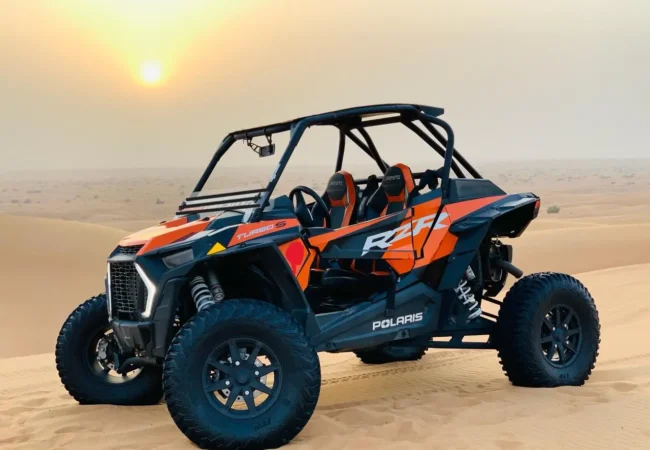
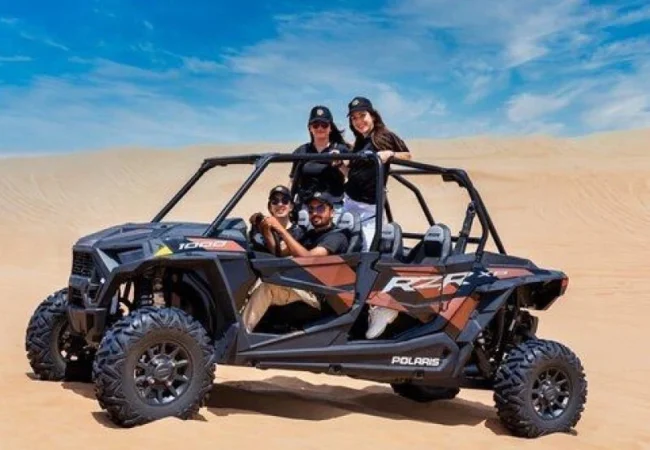
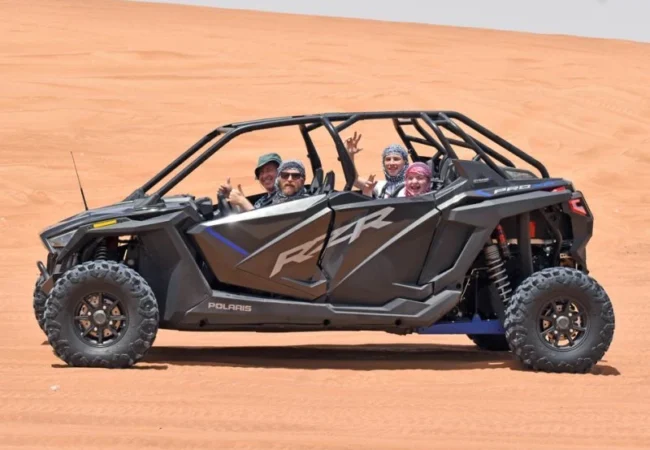
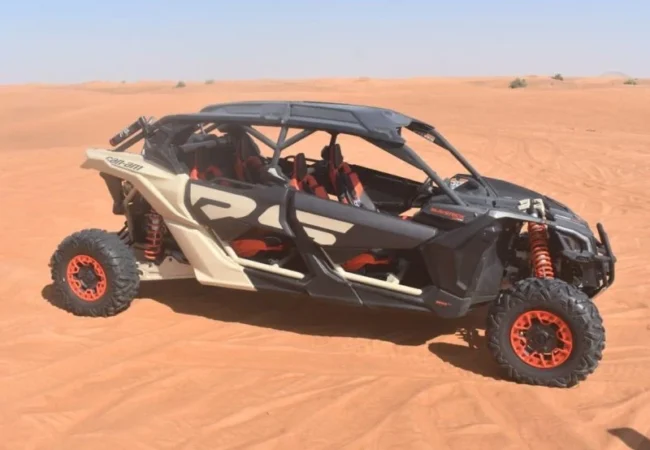
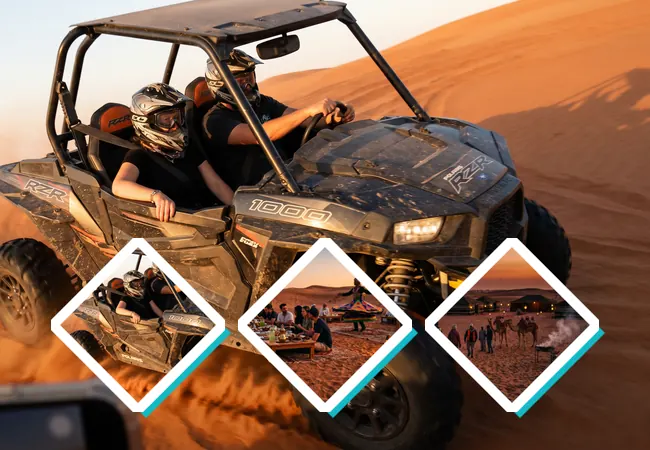
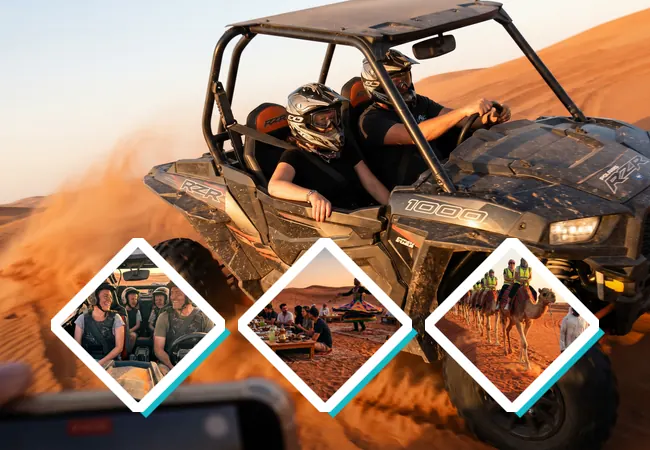
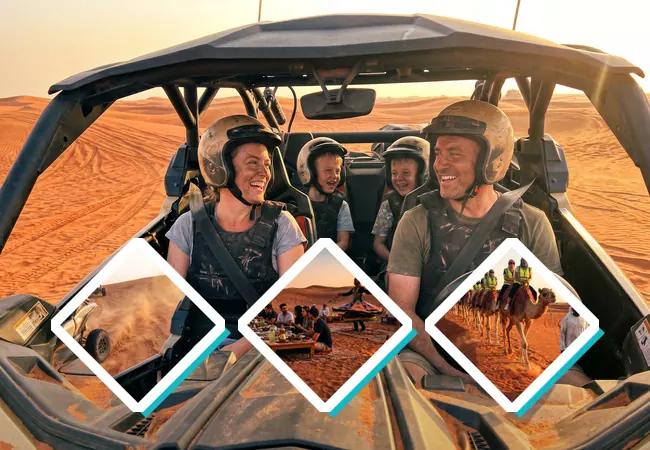
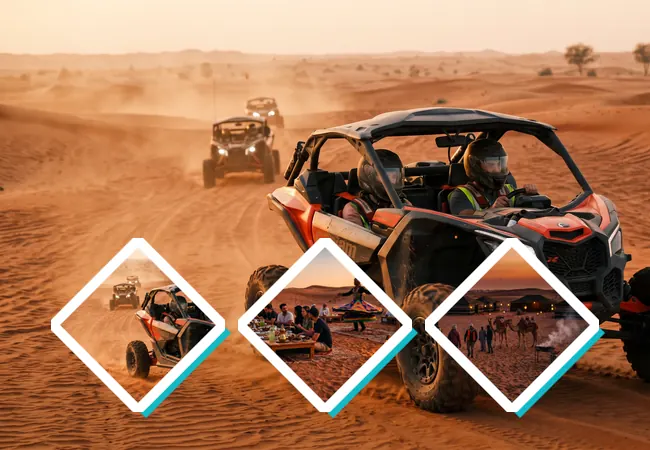
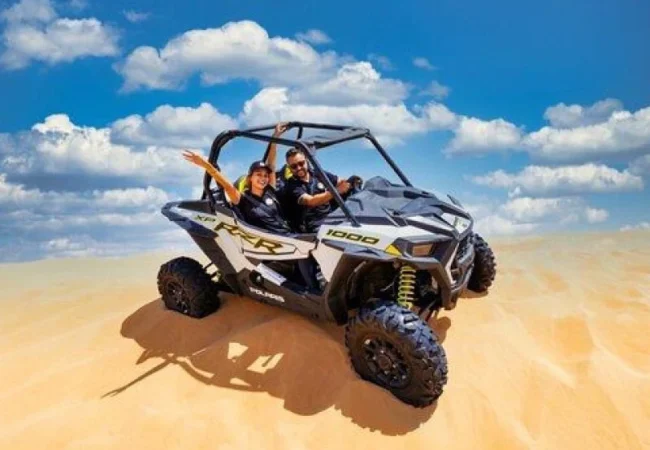
There is no rule that says everyone in a group needs a separate machine, and no rule that says you all have to squeeze into one either. A buggy seats one driver and up to three passengers depending on the model, so two people can share a 2-seater, and three or four can share a 4-seater. What decides the split is usually how many of you actually want to be the one steering, not how many of you showed up.
Groups who all want a real turn at the wheel tend to book multiple 2-seaters, so nobody spends the whole session as a passenger waiting for a swap. Groups where only one or two people actually care about driving, with the rest content to ride along and take in the scenery, are usually better off in a single 4-seater — the rate is set per vehicle, not per head, so it comes out cheaper across the group too. A family of four, for instance, typically finds one 4-seater beats the cost of two separate 2-seater bookings.
Larger groups, six or eight people, typically end up with a small mix: a couple of 4-seaters, or a pairing of 4-seaters and 2-seaters depending on who wants what. The booking desk works this out with you on WhatsApp before you arrive, so the split gets decided by group size and preference rather than guesswork on the day. See the 2-seater or 4-seater breakdown above for the full price and capacity comparison.
There is a cost angle worth factoring in too. A 4-seater plus BBQ combo runs a single price for the whole group's dinner and transfers, while splitting into two 2-seaters for the same evening means two separate combo bookings unless you specifically ask for them to be linked. If your group is heading to the camp afterward, mention that when you book so the transfers and the table get arranged together rather than as two unrelated parties who happen to arrive at the same place.
Is the 4-seater just a bigger version of the 2-seater, or does the passenger experience actually change?
It genuinely changes. The 2-seater's second seat sits right beside the driver in a proper co-pilot position, while the 4-seater's back row sits slightly higher and further from the controls, more removed from the driving itself.
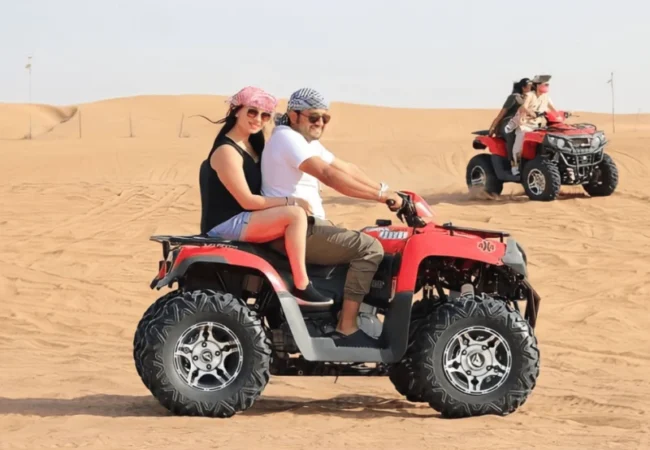
On paper the difference between a 2-seater and a 4-seater is just two extra seats, but sitting in each one tells a different story. The 2-seater's passenger sits directly alongside the driver, close enough to see the same sand, feel the same drops, and follow exactly what the driver's hands and feet are doing. It is a shared experience in a way the 4-seater's back row is not.
The 4-seater's rear seats sit a little higher and set back from the front row, which gives a slightly different view of the dunes rather than a lesser one — more like watching the terrain unfold from a step above, less like being wired directly into the driving. Front-row passengers in a 4-seater get much the same experience as a 2-seater's passenger; the back row is where the difference really shows up.
This matters most when a group is deciding who sits where. If everyone wants roughly the same intensity of experience, two 2-seaters running side by side give a more even split than one 4-seater where two people are up front and two are further back. If the group already has clear roles — a driver, a co-pilot, and two people happy to just enjoy the ride — the 4-seater's layout suits that naturally.
Neither layout changes the driving itself. The controls, the throttle response and the machine's behaviour on a dune face are the same whether the driver has one passenger beside them or three aboard, aside from a loaded 4-seater climbing a soft face a little slower, which is exactly why the turbo version exists for that booking.
One more practical difference: a 4-seater with four adults aboard is measurably heavier than a 2-seater with two, and that extra weight shows on a soft climb, which is why the turbo versions of both the Polaris and Can-Am 4-seaters exist. A 2-seater rarely needs the turbo upgrade to feel adequate; a fully loaded 4-seater usually does, especially if the group plans to book the longer one- or two-hour sessions rather than the 30-minute taster.
Can someone in the group just ride along and never actually take the wheel?
Yes. Nobody is required to drive. A passenger seat is a full booking on its own, and plenty of riders here never touch the controls for the entire session.
Some people book a buggy specifically to drive it, and some people are along because someone else in the group wanted to come and they did not want to miss it. Both are completely normal, and the second group is never pushed toward the wheel if they would rather not take it. The guide briefs every rider on the harness and the basics, but only the driver gets the walkthrough on the throttle and the kill switch.
This comes up a lot with older parents, nervous first-timers, or anyone who has decided in advance that watching is more their speed than driving. A passenger in either the 2-seater or the 4-seater gets the same helmet, goggles and harness as the driver, rides the same route, and stops at the same photo points — the only thing that changes is who is holding the wheel.
It also works the other way: someone who books as a passenger can change their mind mid-session. If a driver wants to hand over and a passenger wants to try, the guide is used to arranging that at a stop rather than mid-dune, usually at the halfway water break or once the group is back on flatter ground. Nothing about a passenger booking locks you out of driving later if you decide you want to.
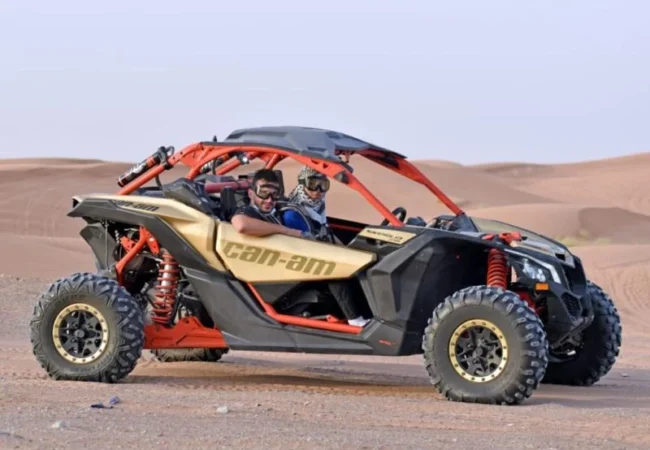
If riding along is the whole plan for someone in your group, the Polaris RZR is generally the more comfortable passenger seat of the fleet, since its ride is smoother and less abrupt than the higher-powered Can-Am machines, which are tuned more for driver feedback than passenger comfort. A nervous non-driver paired with a confident driver in a Polaris tends to have a noticeably calmer session than the same pairing in an X3 RS Turbo RR.
When three or four buggies go out together, how does the group actually stay together on the dunes?
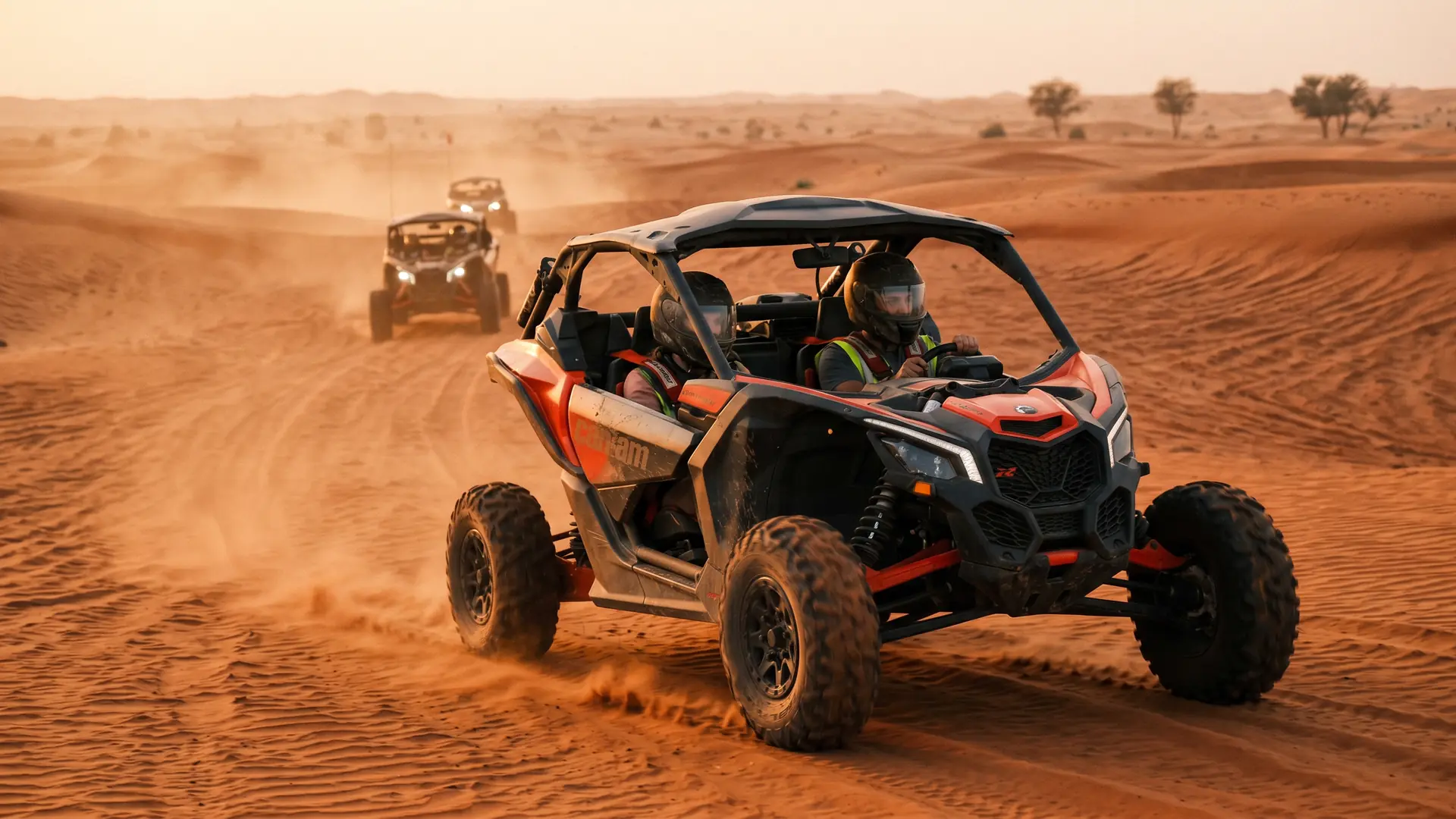
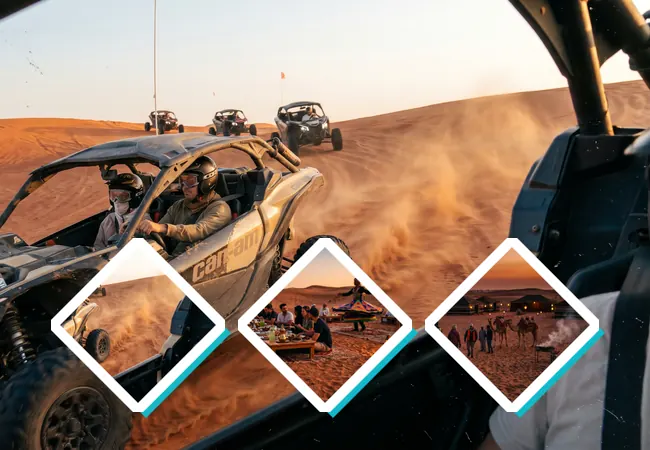
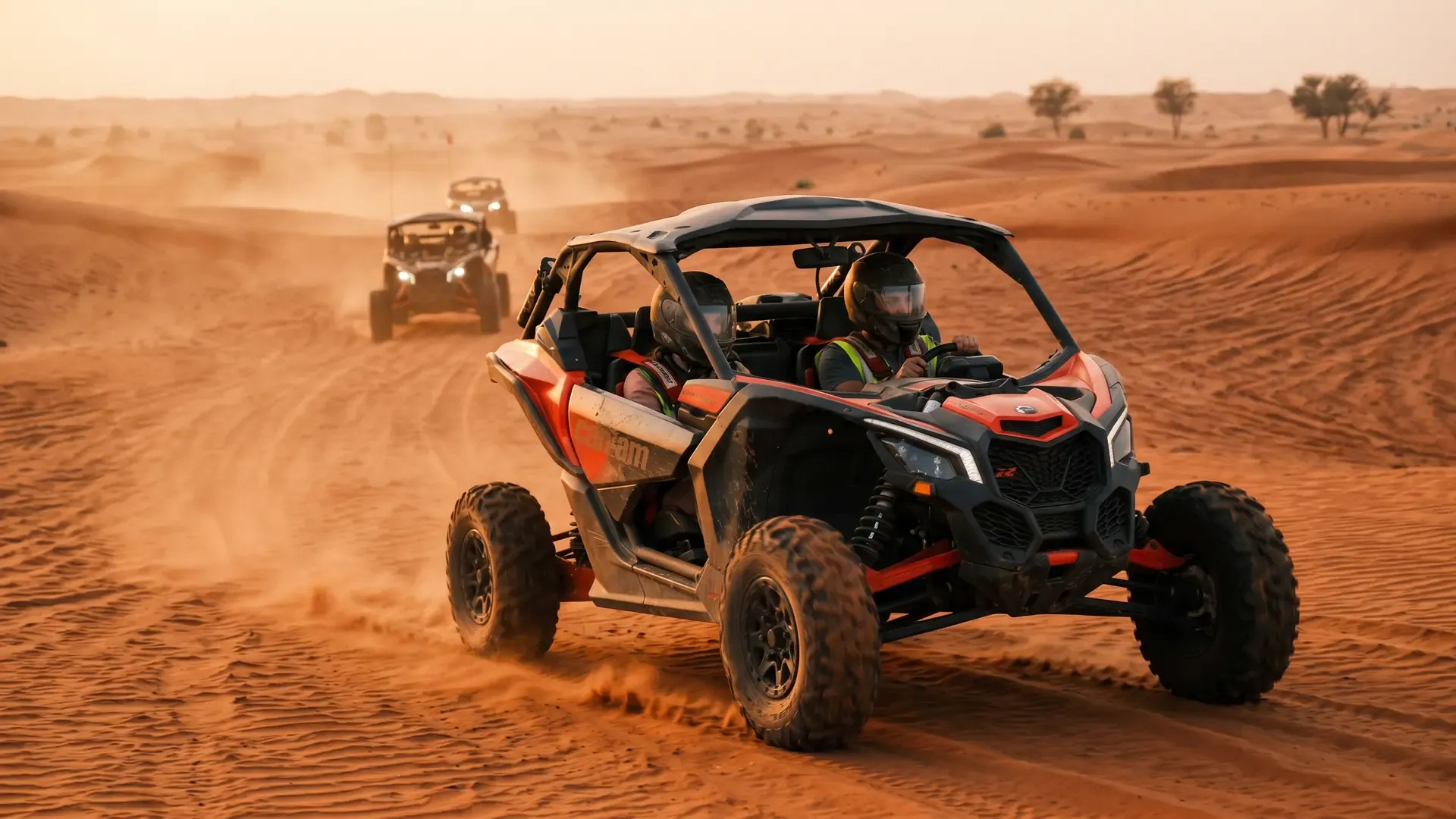
One lead guide sets the route and the pace, and the buggies follow in a fixed order behind them. Spacing is kept deliberately wide enough to avoid dust and close enough that nobody loses sight of the group.
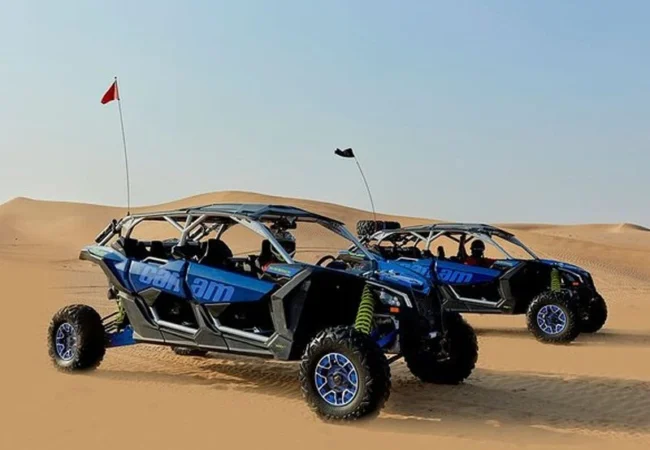
A single lead guide, usually out front on their own machine, sets the line through the Lahbab bowls and controls how fast the group moves. Every buggy in the convoy follows that lead rather than choosing its own route, which is what keeps a group of three or four vehicles from scattering across the dunes or ending up strung out with nobody sure who is ahead.
Spacing between buggies is managed deliberately rather than left to chance. Too close behind another machine and you are driving through its dust trail, which cuts visibility; too far back and the guide has to slow the whole group to keep everyone in sight. The guide sets that gap at the start and adjusts it through the session, tightening it on flatter stretches and opening it up on faster runs or bigger dune faces.
Communication on the move is mostly hand signals and following distance rather than radios — a raised hand for stop, a change of line to mark a soft patch, that sort of thing. Photo stops and the halfway break are where the group actually regroups and talks, and it is also when a driver swap usually happens if anyone in a buggy is trading the wheel. Nobody is left to find their own way back; the whole convoy returns together, the same way it went out.
If one buggy in the convoy needs to stop unexpectedly, a stall, a driver wanting a break, sand in a boot, the rest of the group stops with it rather than continuing on without them. Nobody gets left on a dune waiting for the group to loop back. It is one of the clearer reasons a lead guide runs every session here rather than letting a group work out the route on their own.
Bigger groups, five or six buggies on a corporate booking or a large family trip, sometimes get a second guide riding at the back of the convoy specifically to make sure nobody drops off the pace unnoticed. It is one more reason larger groups are worth flagging in advance on WhatsApp rather than turning up and hoping the numbers work out on the day.
Our group only booked two buggies between six people — who decides who drives?
The group decides, not the operator. Most groups agree on an order before the session starts, and swapping the wheel at the halfway stop is common enough that guides build it into the pace without being asked.
Nobody at the desk assigns drivers, and the guide is not going to referee an argument about it either — that is entirely up to whoever booked the buggies. What tends to happen in practice is one of two things: the group sorts it out on the spot, often by whoever is most confident simply offering to go first, or it gets agreed before the trip even starts, especially if it is a birthday or a group where one person clearly wants first go.
A driver swap partway through is genuinely easy to arrange and happens often enough that it barely counts as unusual. The natural point to do it is the halfway water stop, when the group is already parked and the guide is not managing a moving line of buggies. Swapping mid-dune, while everyone is still moving, is not something guides encourage, mostly because it means stopping on a slope rather than flat ground.
For six people across two buggies specifically, a common pattern is two people per buggy driving one leg each, with the third and fourth spots filled by whoever is not driving that stretch. On a one-hour booking that usually means everyone gets a real turn without anyone feeling shortchanged. On the 30-minute entry ride there simply is not much time for more than one swap per buggy, which is worth knowing before you split a big group across a short session.
If two buggies genuinely is not enough for six people who all want a fair turn, it is worth asking whether adding a third machine, even for part of the session, changes the maths in your favour. The booking desk can usually quote that as a same-day adjustment against the standard rate card if you realise on arrival that the split is not working, though locking in the right number of buggies before you arrive avoids the conversation altogether.
Is there a minimum age or requirement to ride as a passenger, even if you're not driving?
Passengers do not need to meet the driving age or licence requirements, but a child riding in a buggy still needs to sit beside an adult who is driving, and very young children are better suited to the camel ride or a Land Cruiser safari instead.
Driving a buggy has an age and ability check built into the warm-up, but riding as a passenger is a lower bar, since there is no throttle or steering involved. That said, it is not a bring-any-age situation either — a buggy seat still involves a harness, real speed and rough ground, so the guide makes a judgement call on younger children the same way they would for a nervous adult driver.
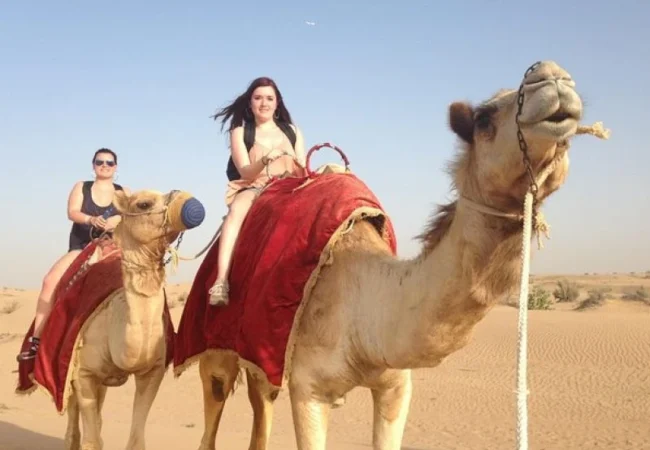
In practice, a passenger seat works well for older kids and teenagers who are happy to ride along, and for adults of any age who are physically able to sit through the harness and the bumps. Very young children, and anyone who cannot be securely harnessed, are usually steered toward a calmer option instead — the camel ride at Al Lahbab is open from age 3 with an adult, or a desert safari in a Land Cruiser, which handles differently to a buggy on rough sand.
The same medical restrictions apply whether you are driving or riding along: being pregnant, living with a serious back, neck or heart condition, or having had surgery recently all take a buggy seat off the table regardless of who else is behind the wheel. If you are unsure whether someone in your group, driver or passenger, fits within that, it is worth flagging on WhatsApp before you pay rather than finding out at the briefing.
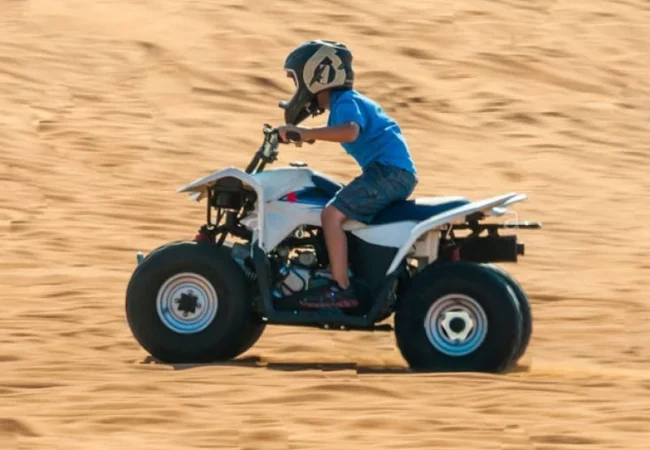
For a child who wants to be behind actual controls rather than riding along, the supervised Yamaha 90cc quad track is the usual alternative to a buggy passenger seat, open to the 9-to-12 bracket as long as a guardian is close by. It gives a child their own machine on a controlled loop rather than a passenger role in something faster and less predictable, and plenty of families book it alongside the adults' buggy session for exactly that reason.
What's the etiquette if one person in your group is a much more confident driver than the rest?
Mention it before the engines start rather than partway through a dune. Guides handle mixed-experience groups constantly and will gladly send a confident driver first or onto the harder line, while keeping everyone else at a realistic pace.
This comes up in almost every group of more than two, and there is no need to pretend everyone is at the same level. Mentioning it to the guide during the briefing, or even earlier on WhatsApp, means the session gets shaped around the actual mix rather than an average that suits nobody. A confident driver held back to a beginner's pace the whole time gets bored, and a nervous driver pushed to keep up with someone faster gets an afternoon they did not want.
The usual fix is fairly simple: the more confident driver goes first through the warm-up and the first few dune faces, giving everyone behind a visual read on the line before they try it themselves. On multi-buggy bookings, that same driver often ends up nearer the front of the convoy for the same reason. Nobody is forced to match anyone else's pace, and the guide is the one setting the overall speed for the group regardless of who is enjoying it most.
Where it gets awkward is when the more confident driver is quietly frustrated by a slower pace, or a nervous driver feels pressured to keep up. Both are worth raising directly rather than letting it sour the day — guides deal with exactly this mix often enough that a quick word, either at the briefing or at the halfway stop, usually sorts it without anyone feeling singled out. It is also a reasonable moment to suggest a driver swap, so the confident driver gets a faster stretch later in the session while someone else takes a gentler turn.
The guide's judgement still overrides group preference on anything genuinely unsafe, regardless of how the group wants to sort itself out. A confident driver asking to go noticeably faster than the guide's pace, or push a line the guide has not cleared, gets the same answer everyone else does. Confidence changes how much of the route a driver is trusted with over the session, not whether the safety calls apply to them.
People also search for
Guide FAQ
Can a solo traveller be paired into someone else's group buggy, or is every booking private to your own party?
Every buggy on a booking is reserved for your own party only. A solo booking gets its own machine rather than being paired with strangers, so if you are travelling alone and want company, that has to come from people you actually booked with.
Is there a maximum group size for one booking, or a limit on how many buggies can go out together?
There is no fixed cap on group size. Bookings of ten or more people across several buggies are arranged routinely, usually with an extra guide added to keep a larger convoy together. Larger groups are best flagged a few days ahead so enough machines and guides are free on your date.
If someone in our group drops out last minute, can we still use their seat for someone else?
Yes, a passenger seat that opens up can go to anyone else in your party on the day, since the booking is for the buggy rather than a named seat. If the whole booking needs to shrink by a buggy, message ahead so the machine count can be adjusted before you arrive rather than on-site.
How does the price actually get split when several of us share one buggy?
The listed rate covers the whole buggy, not each person in it, so how you divide that cost is entirely up to your group. Most groups just split it evenly by headcount regardless of who ends up driving, though some let the driver pay a little less since they are doing the work.
Can we request to ride at a specific position in the convoy, like right behind the lead guide?
You can ask, and the guide will usually accommodate it if it does not conflict with spacing or experience levels, but final convoy order is the guide's call rather than a fixed booking option. Groups with a genuinely more confident driver are often placed nearer the front anyway.
Is it possible to add an extra buggy partway through if our group decides two was not enough?
Sometimes, depending on same-day availability, and it is worth asking the guide directly rather than assuming it is off the table. It is not guaranteed, though, since spare machines depend on what else is booked that day, which is why getting the buggy count right before you arrive is the safer plan.
Do couples get any kind of preference for a 2-seater over being placed in someone else's 4-seater?
Booking a 2-seater is the direct way to guarantee it is just the two of you in one machine, since a 4-seater booking is never filled with people from another party. If your group of six books three 4-seaters and only fills two of them, the empty seats stay empty rather than being offered to a couple who booked separately.
If two people in our group want to drive the exact same buggy back to back, does the vehicle need re-checking between them?
The guide does a quick visual check between drivers as a matter of routine, mostly confirming the harness is refitted properly for the new driver's size, rather than a full re-inspection. It takes a couple of minutes at a stop and does not meaningfully eat into your session time.
Can one person in the group book and pay for everyone else's seats in the same buggy?
Yes, one person can book and pay for the whole buggy, and that is actually the more common way multi-seat bookings happen here rather than everyone paying separately. Just list who is riding, including ages for anyone under 18, when the booking is confirmed.
Is a nervous first-time passenger treated any differently from a nervous first-time driver during the briefing?
Passengers get a shorter briefing since there is no throttle or controls to cover, but the guide still talks through the harness, what to expect on the bigger dune faces, and the stop signal if anyone wants a break. A nervous passenger is welcome to say so upfront, and the guide will usually check in with them more often through the session.
 AED 599